Read on for a tale of a shiny ring for the other woman and some full size model making
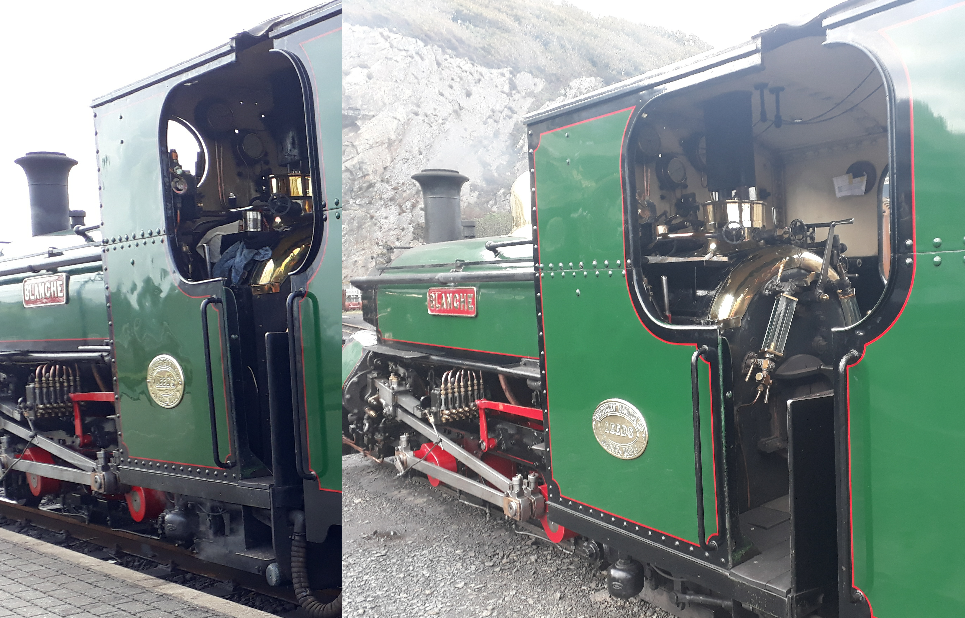
Spot the Difference
A month or so ago I was doing a 10 day stint of driving turns on the Festiniog Railway most of which was to have been on my favourite loco Blanche. Blanche, aka Ricket, is referred to as the other woman by my other half Annie. I posted the picture below to FaceBook with the caption of “home for the next 10 days”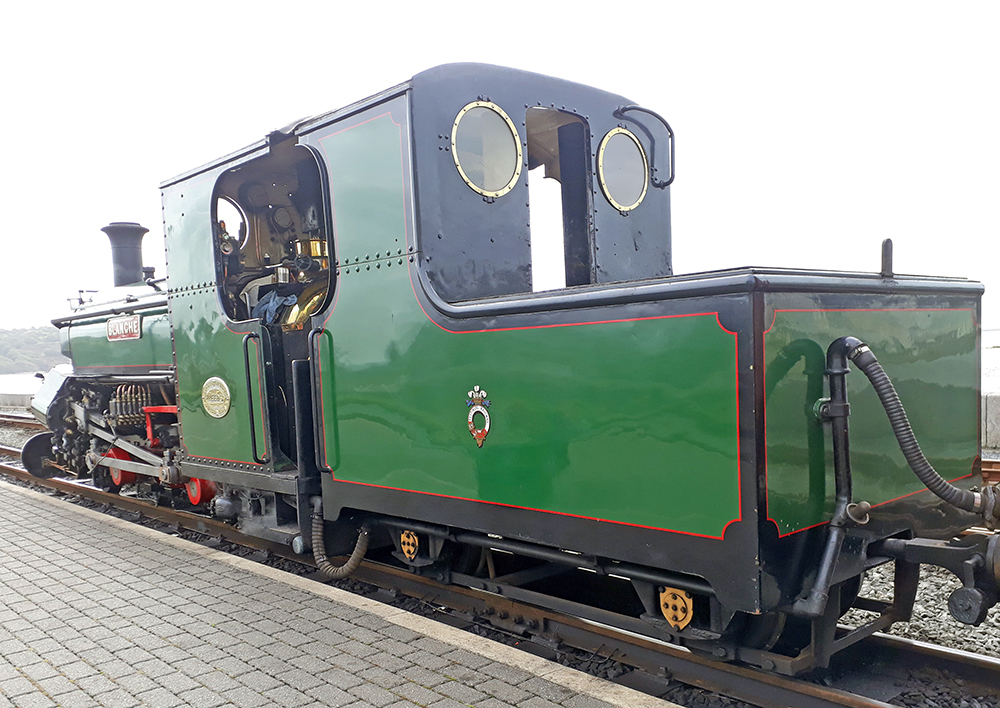 There were a number of comments, mostly of people being jealous, but this one from the boss

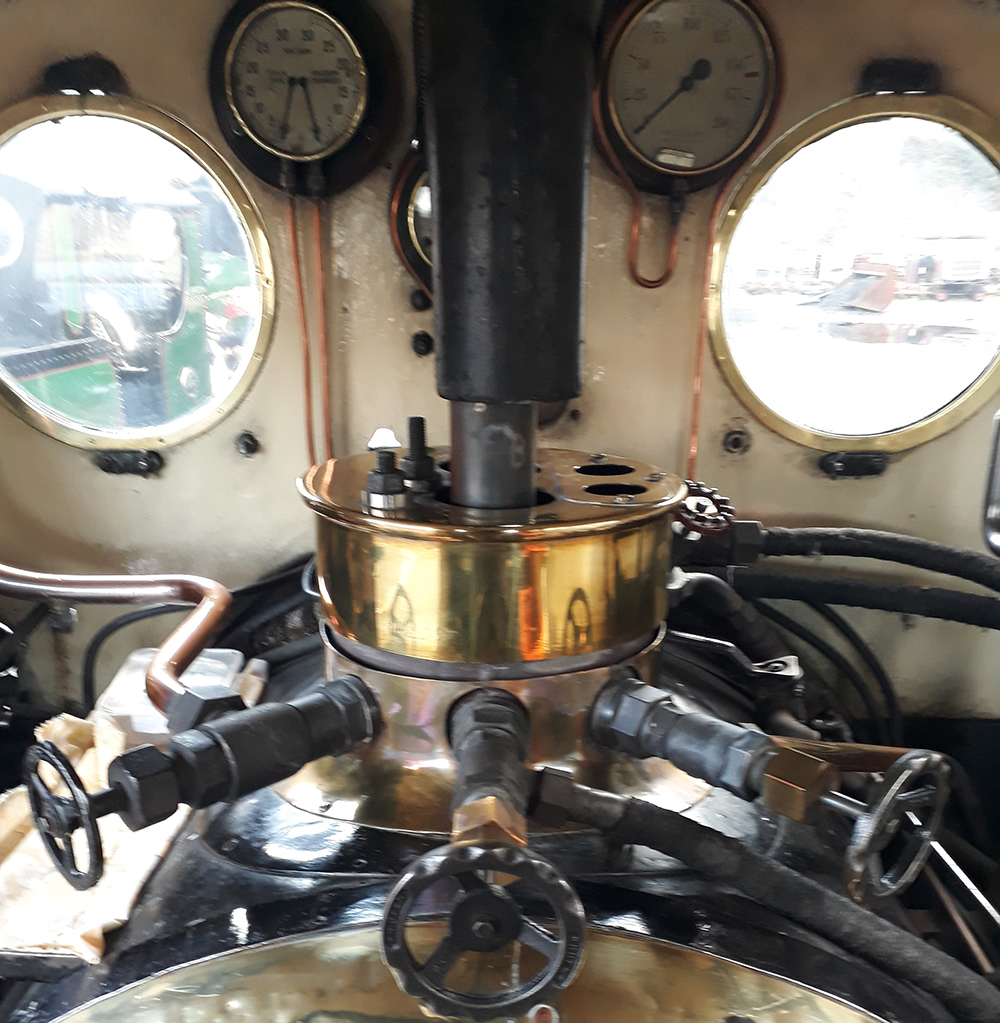 Now to put this in context and explain. In 2004 Blanche had a new boiler fitted and it wasn’t quite the same shape as the old one.
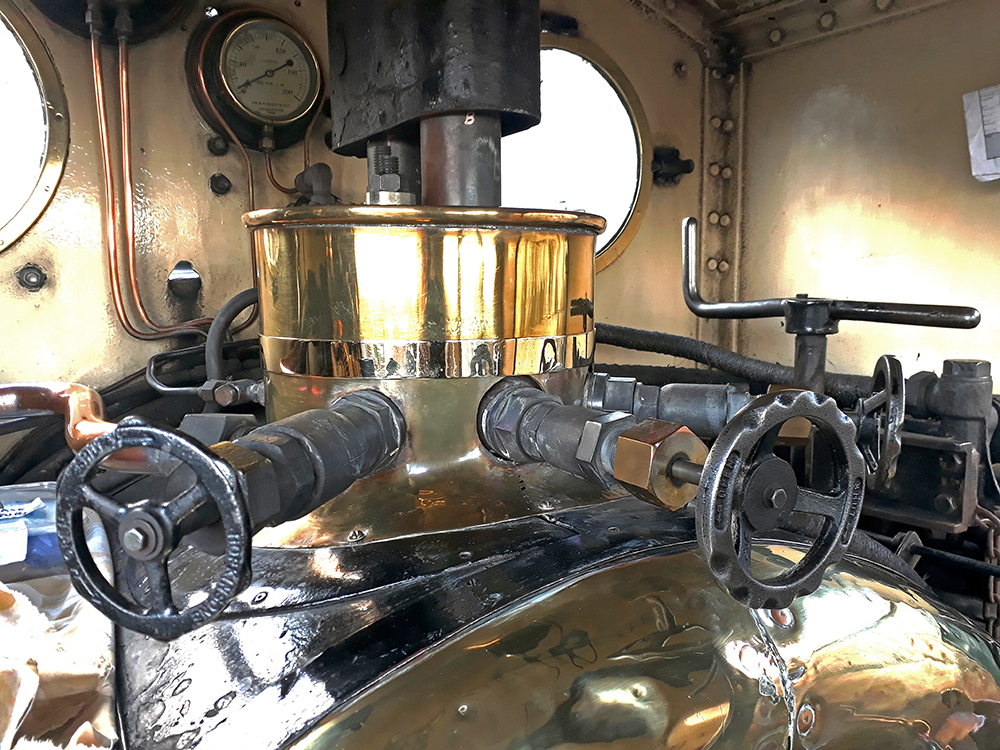
The turret in the cab was a bit taller than the old one so when the brass trim was added it didn’t meet up and there was this unsightly gap between the two items.
As is traditional an overhaul that was declared not urgent and not a priority at the start turned into a “can it be on the 3 O’clock tomorrow” kind of urgent so it went back into traffic with the gap. Since then many of us have looked at the gap whilst working the engine and thought we should do something about it and then forgotten about it.
Now we had an edict from the boss.
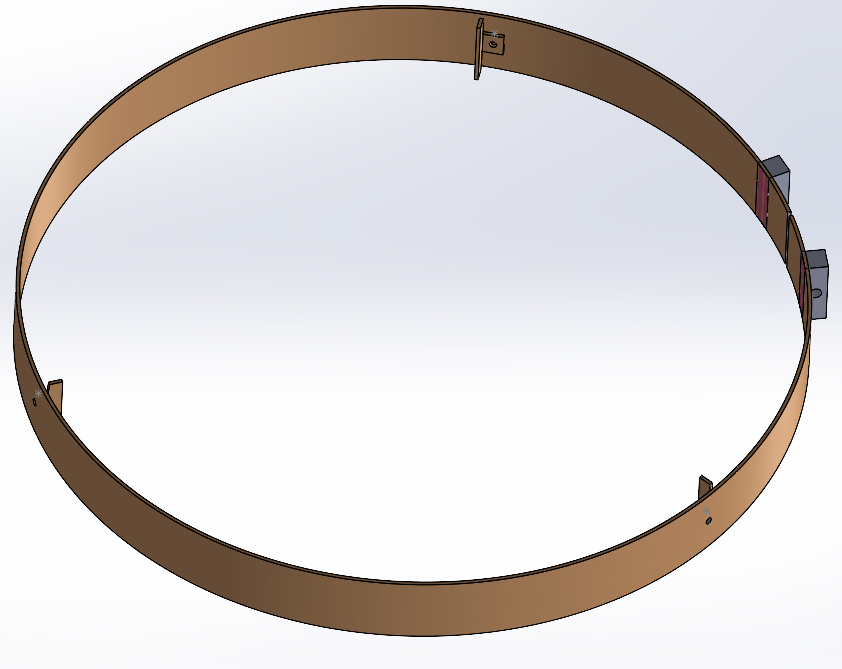 During that visit a tape measure was waved around the loco, heads scratched to remember how to calculate a circumference and a drawing done. This was followed by some searching for materials.
Think of it as a big shiny jubilee clip with some inner bracketry to make the bits that go above and below line up.
Just to confound a definitely imperial engine its 30mm deep, approx a 1m long on a diameter of 315mm and 1.5mm thick. Yes, as soon as it came to ordering the brass all the suppliers were metric.
Now the boss wouldn’t let me take Blanche home so some improvisation was  required. The first thing I did was to make a former by laminating three layers of MDF together and then cutting a turret sized circle out of it.
The brass was first rolled to an approximate sized using the rollers of the Formit machine I have in my workshop. This wasn’t totally successful but than it was the first time I have used the rollers usually just using the guillotine. It tended to produce an ellipse rather than a circle.
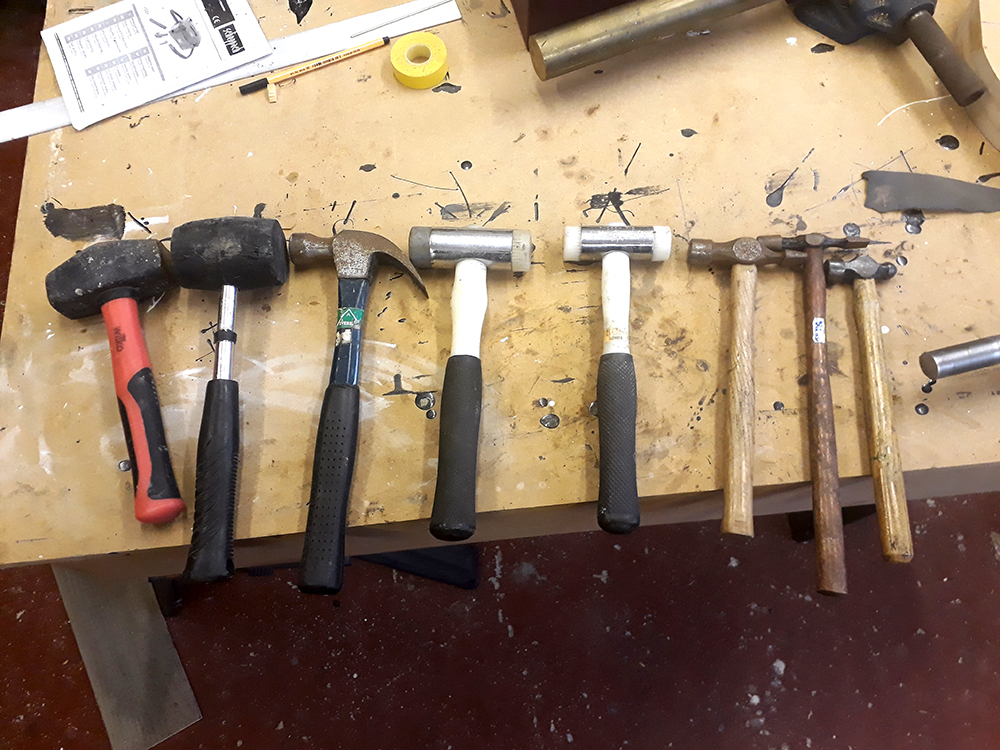 This is when I discovered my hammer collection was lacking in the mid range.
Not having an anvil (or having room for one) some bending tools were cobbled up to mimic one and allow the ring radius to be closed or opened up by putting it on the two bars either way up and hitting it whilst rotating it.
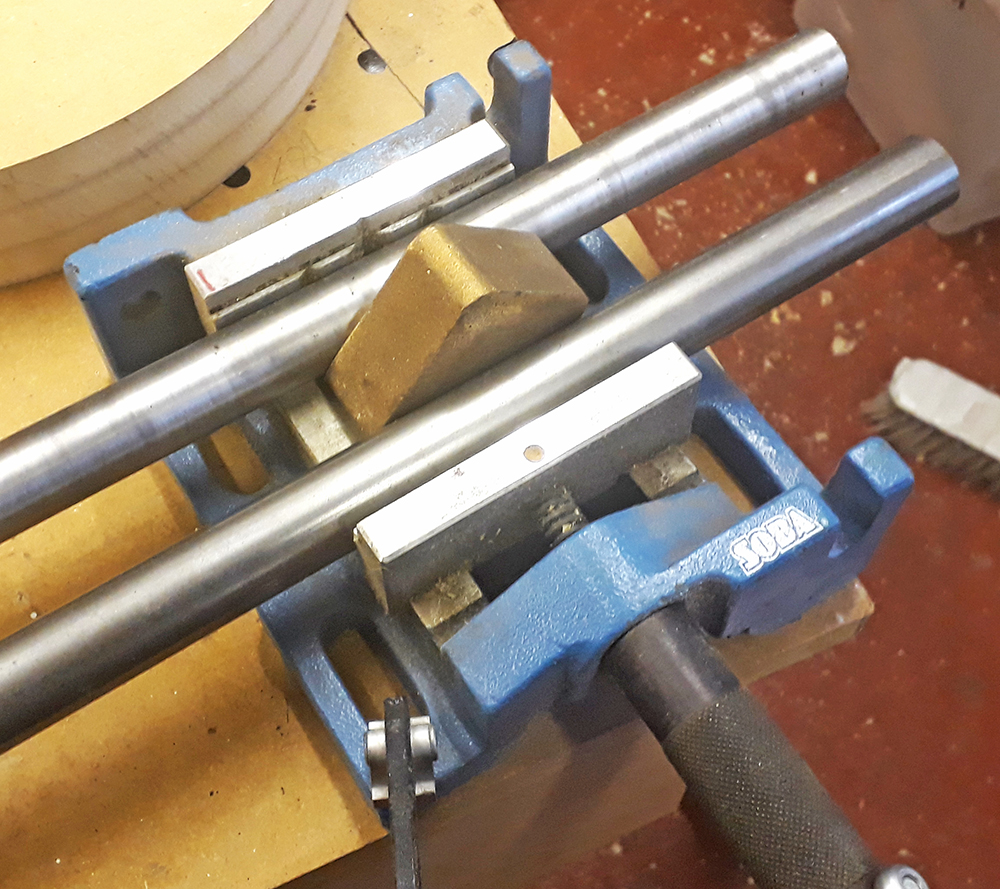
This was done until it roughly slipped over the MDF former.
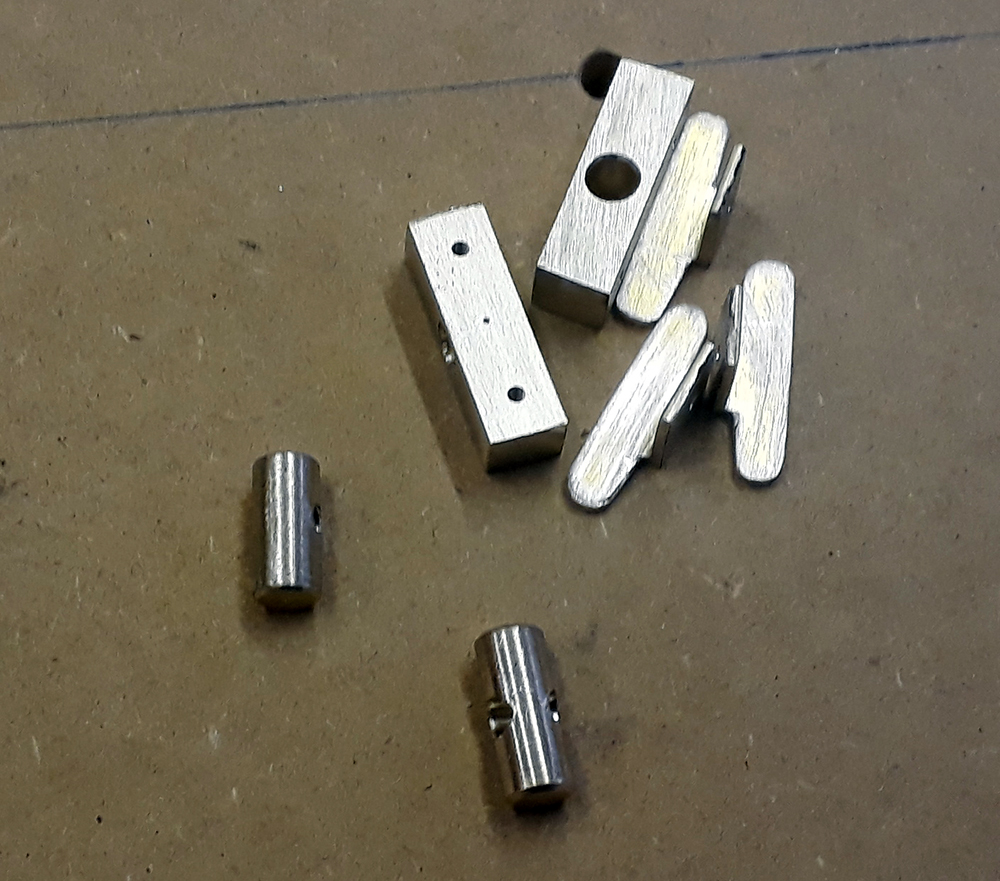
Small fittings were made from brass angle, brass square and brass round bar. They were tapped with 8BA holes to fit them to the ring initially.
One of the round bits had its hole tapped M4 whilst the other was made quite large over size for the M4 screw to pass through.
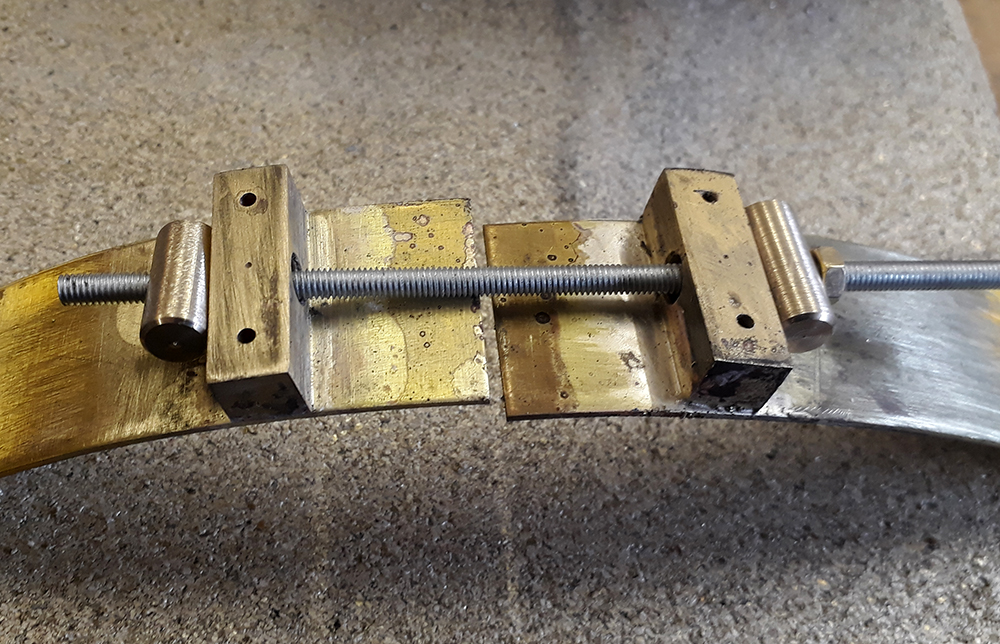 The square blocks were silver soldered on away from the ends just in case they had to be shortened when it was fitted to the loco – again the risk of it not fitting and the impracticality of 400 mile round trip for a test fitting.
The alignment brackets were silver soldered to the inner face spaced at thirds around the ring.
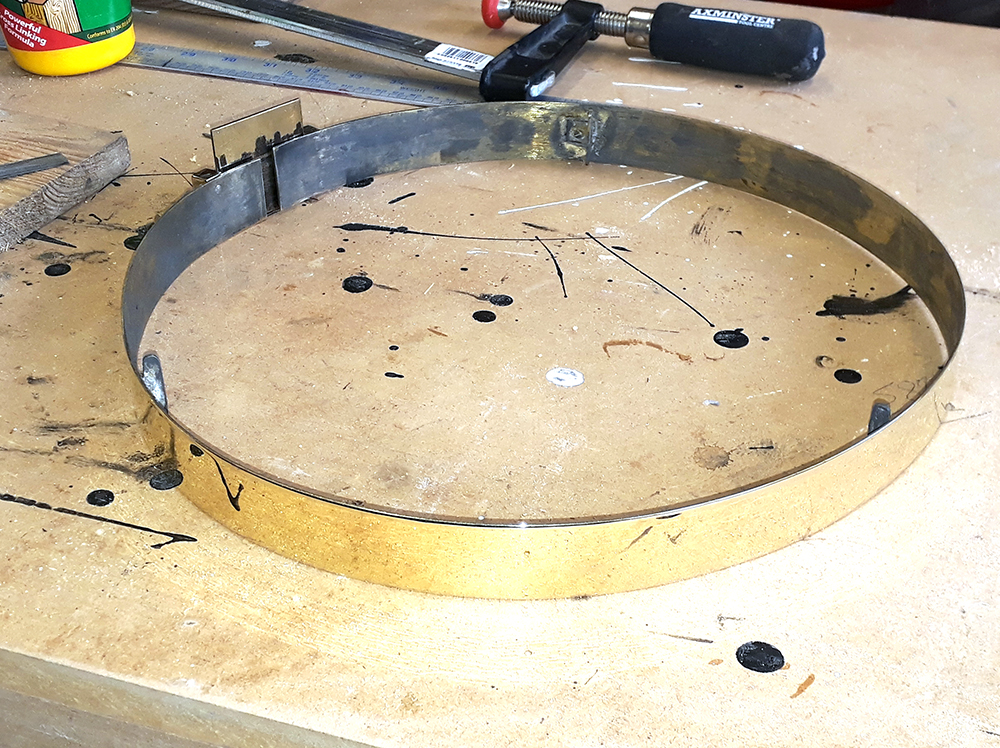 With all the soldering done the surplus screws were cut of and filed flush. The ring was looking pretty battered after all this work and it was going to take more than brasso to polish this up.
Fortunately, I discovered that one of our local (to York) motorcycle dealers also does metal polishing. Getting it polished cost me £35 but it probably saved that value in brasso.
With the FR Bygones Weekend (a Covid19 compliant version of the usual Victorian Weekend) on the 9th -11th October it was time to head to Wales with the aim of fitting the ring before the event. This was approached with a lot of trepidation as to whether it would fit and if it could be fitted without dismantling too much engine.
Luckily, it fits!