The weekend of 9th & 10th September was the late season Transport Gala at Beamish Museum. There was also a photo charter on the Friday which meant lighting all the engines up a day earlier. The transport gala encompasses the entire site with traction engines, vintage cars, lorries buses and motorbikes (and probably lots of other stuff) all circulating around the site. I was there to be a driver on the colliery railways so this report is mostly about that.
On the narrow gauge railway we had two visiting engines and two home based engines although for the Friday we only steamed on of the home engines. Photo charters can really try ones patience as, in pursuit of that one off shot, the participants seem to have little regard for their safety and little understanding of the equipment being photographed.
 One rather super shot from the Friday was to get the three engines in a line up. From nearest the camera they are Ashanti #9 (from Apedale), Ogwen (Statfold and Apedale) & Glyder, the Beamish resident.
 Saturday and Sunday was more normal with the four engines taking it in turns to run trains around the narrow gauge layout which is basically a triangle with sidings at two of the three ends (so far). A lot of the weekend was about this pairing. This being the first time they’ve been in steam together since 1965.
Both were originally built for the Durham County Water Board in the early 30’s for the building of Burnhope Reservoir which is quite close to Beamish. Then they were known a Durham and Grey. In 1936 they were sold to Penrhyn Quarry in North Wales where they got their Welsh names. Used briefly they were stored as they quarry staff preferred their quarry Hunslets (a view I agree with). They were brought back in to use in the 50’s as they became the best locos they had as the Hunslets aged and became worn out with failing boilers. The pair worked into 1965 when they, and a lot of other engines, were sold at auction as the quarry converted to road transport.
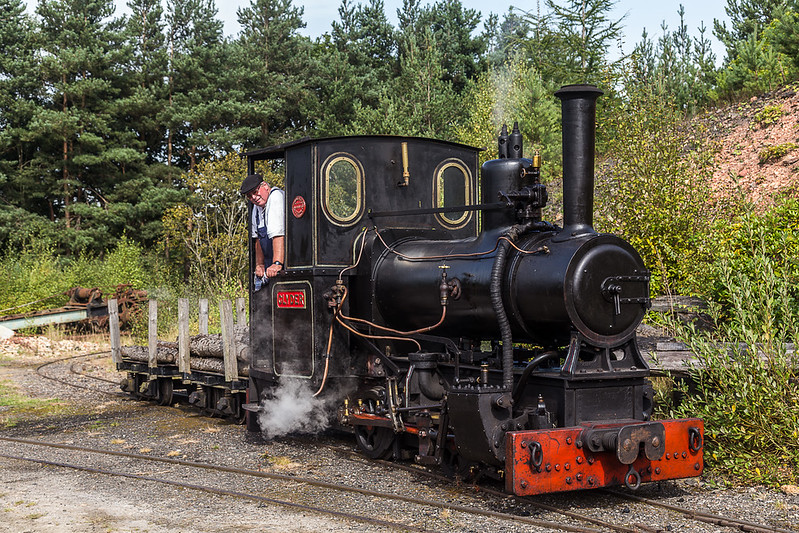 They were both part of a consignment of engines that went to the USA. Although kept safe nothing happened to them and attempts to repatriate them were rebuffed until 2014 when another engine was returned and proved to be something of a cork out of the bottle. Glyder and Ogwen returned in 2015 and were stored at Beamish for three years. Ogwen left for restoration elsewhere and Glyder was returned to steam at Beamish in 2019.
I spent the Friday and much of Saturday as Glyder’s driver but there were enough of us about to take it in turns and to have a bit of a look round. Also, equally important was sharing the shade and keeping hydrated as it was really too hot for messing about with steam engines.
 The other engine that came out to play on the Saturday and Sunday was the Beamish built and based Samson. This very quirky loco, built from interpreting just one existent picture is a bit of an acquired skill to operate. Most of us leave well alone.
I think its fair to say that Matt, on the left in this picture, is its master and gets it to do things that others can’t (or don’t want to).
The red van is a brake van that was built at Beamish but as well as a handbrake it has a stove with brewing and cooking adaptations so is often referred to as the buffet car. We didn’t light it up this weekend as it was way too hot for having the fire lit.
 The standard gauge line in the colliery was operating with just the Coffee Pot.
The lines other resident, the Lewin, is out of boiler ticket and the visitor we had earlier in the year has gone on its travels.
Coffee Pot was my engine for Sunday with a very pleasant first 3/4 of the day spent with David Moseley as my fireman. David now works at Beamish but had worked out that it was something like 35 years since we first shared a footplate when I took him on and Double Fairlie in Porthmadog. During the day we were treated to two flypasts by the red arrows but I suspect that was more to do with the Great North Run than anything we were doing.
 When saying it was great for 3/4 of the day I didn’t mean to imply that part way through the day we fell out, The two and a half days of “its too hot for playing trains” came to an abrupt halt.
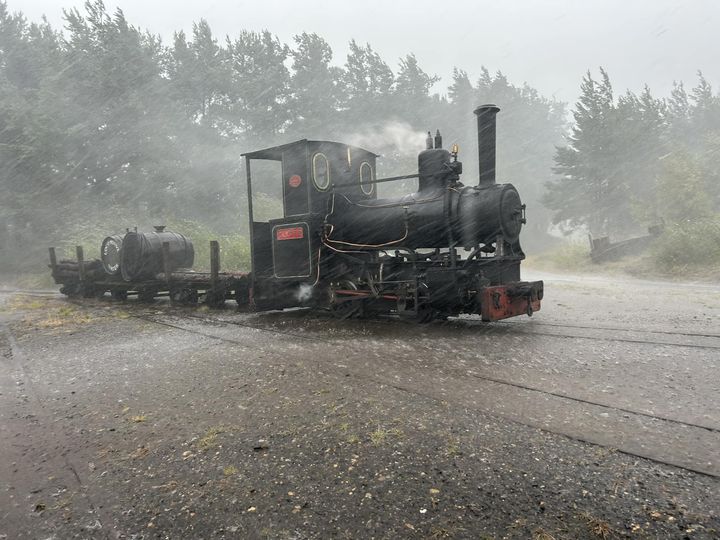
A few rumbles of thunder and a drop in temperature was a prelude to a torrential downpour of biblical proportions. Engines with cabs were abandoned for better shelter. Drivers of cabless coffee pots caught at the furthest point from shelter got drowned!
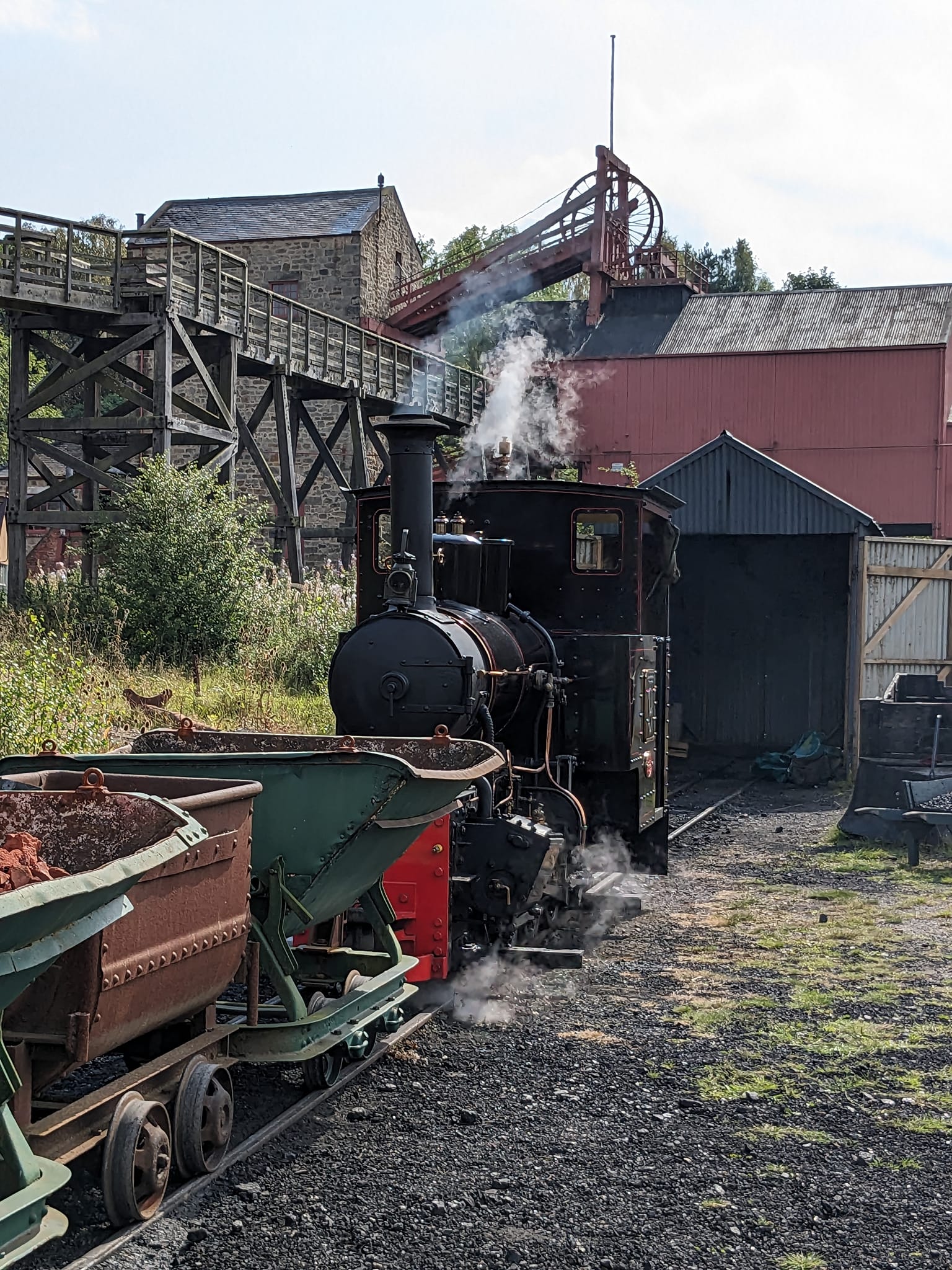
This picture of Glyder forlornly abandoned doesn’t convey the full force of the storm. This link, to a Facebook video just might, it it works. Pelting it down
That pretty much ended the play for the afternoon. Rails across baked hard earth were suddenly under water. Engine disposal areas became lakes. There was a waterfall into the standard gauge pit and the mess room filled inches deep with sludgy water. It also caused the trams problems washing debris into the flangeways.
That pretty much ended the play for the afternoon. Rails across baked hard earth were suddenly under water. Engine disposal areas became lakes. There was a waterfall into the standard gauge pit and the mess room filled inches deep with sludgy water. It also caused the trams problems washing debris into the flangeways.
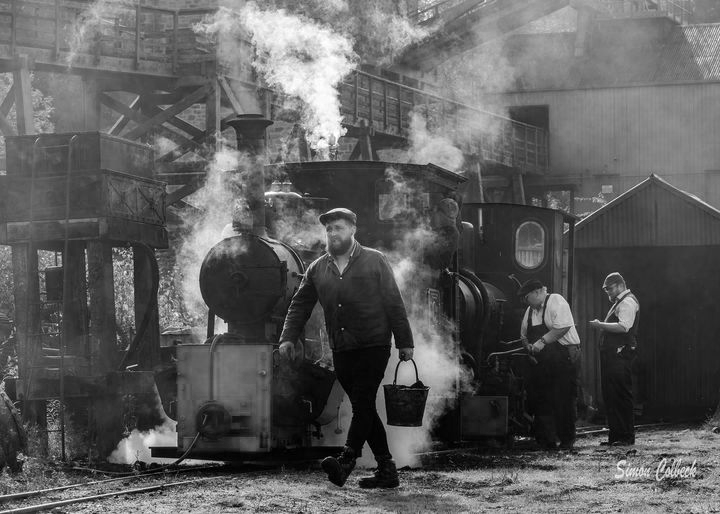
We do all this though so we can recreate scenes like this

 I didn’t get to take many photos during the weekend, and any I did take are yet to come off my phone which took exception to the downpour. As a result I’d like to add a quick thank you to those that have let me use theirs here. Thank you Matt Ditch, Richard Jones, Chris Hoskin and anyone I’ve missed.